
Paleolit diet

Among the foundations of functional nutrition the Paleolithic (paleo) diet certainly deserves mention. The basic principles of the Paleo diet are as follows: no sugar, flour, processed foods, grains, legumes (lectins), or dairy products. However, clean, preferably organic, unprocessed meats (such as chicken, fish, turkey, beef, lamb, etc.) are allowed. All fruits and vegetables may be eaten in moderation. Coconuts, nuts, and seeds can be consumed in their unprocessed form. Almond or coconut flour may be used if necessary.
The basics of the Paleo diet
The Paleo diet includes the following foods:
- Red meat – from animals not fed grains. Grains cause similar problems in animals as they do in humans.
- Poultry – such as chicken, duck, and turkey.
- Fish – wild-caught fish is recommended, as farmed fish may contain mercury and other toxins.
- Eggs – preferably from free-range chickens not treated with antibiotics or hormones are preferred, especially those enriched with omega-3 fatty acids.
- Vegetables – can be consumed in any quantity, as long as they are not fried.
- Oils – olive oil, coconut oil, and avocado oil are permitted. Natural oils are allowed, but soybean oil and other processed oils are not recommended.
- Fruits – due to their natural sugar content and higher calorie count, fruit intake should be limited by those aiming to lose weight.
- Nuts – rich in antinutrients, they should be eaten in moderation.
- Tubers – such as sweet potatoes and yams. Due to their high calorie and carbohydrate content, they are ideal for replenishing glycogen after exercise.
Foods not allowed on the Paleo diet:
- Grains, including barley, corn, oats, rice, rye, and wheat
- Beans or legumes
- Dairy products
- Refined sugars and artificial sweeteners
- Refined fats
- Carbonated soft drinks and fruit juices
- All chemicals, additives, artificial flavorings, and monosodium glutamate 1
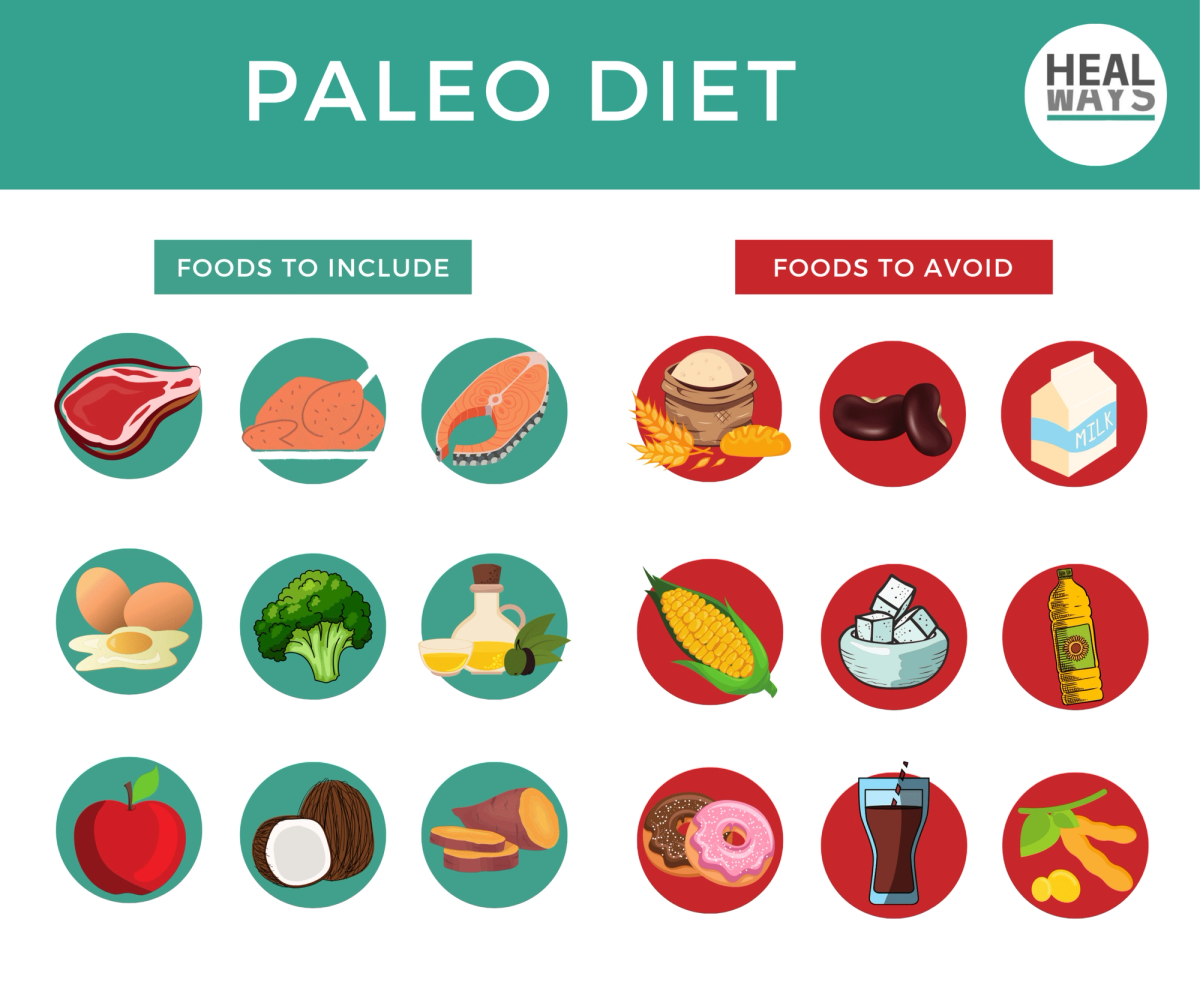
Figure 1: Foods that are allowed and should be avoided according to the principles of the Paleolithic diet
Different approaches to the Paleo diet
In recent years, the Paleo diet has gained increasing popularity, but there remains much debate about its precise definition. These debates revolve around the following questions:
- Is it actually a low-carbohydrate or low-fat diet?
- Are saturated fats permitted, and if so, in what amounts?
- How much protein should be consumed on a Paleo diet?
- Are dairy products included in the Paleo diet, and if so, which ones?
- Are grains allowed?
As low-carbohydrate diets have grown in popularity, many individuals have transitioned to the Paleo diet. This shift has blurred the line between low-carb diets and the Paleo approach. For such individuals, the Paleo diet is high in fat—particularly saturated fat—low in carbohydrates, and moderate in protein. More recently, some authors have advocated for a paleo-inspired diet that, depending on individual tolerance, includes certain dairy products and grains such as white rice and buckwheat. Others recommend a high-carbohydrate, low-fat diet (as long as carbohydrates come from starchy vegetables rather than grains) as optimal. The answers to these questions depend on several factors. First, are we asking what our Paleolithic ancestors ate, or are we seeking the optimal diet for modern humans? While strict proponents of the Paleo diet argue there is no difference, others suggest that the absence of a food in the Paleolithic era does not necessarily mean it is unhealthy. Dairy products, for example, illustrate this point well. Moreover, recent studies show we cannot be entirely certain about the diets of our ancestors. There were significant variations among different ethnic groups. For instance, the Eskimos and the Masai consumed high-fat diets (with 90% and 60–70% of their calories from fat, respectively), whereas the Okinawans and Kitavans derived 60–70% of their calories from carbohydrates. So, without specifying which ancestors we mean, we cannot assert that their diets were uniformly low in carbohydrates or fats. If, instead, we are trying to determine the optimal diet for modern humans (rather than speculating about the past), there is no single correct answer. Just as dietary habits vary between populations, individual needs also differ widely. Some people benefit from avoiding dairy, while others experience no negative effects. Some thrive on a low-carb diet, while others do better with higher carbohydrate intake. Protein needs also vary—some may require as much as 20–25% of their caloric intake from protein, while others do well with just 10–15%. The only way to determine the ideal diet is through experimentation. The best approach is to eliminate foods suspected of causing issues and observe the body’s response. Humans are both alike and different. Our basic physiology is the same, which is why the Paleo framework can be useful. Certain foods have harmful effects on everyone due to their chemical makeup, regardless of individual variation. At the same time, we are unique. We come from different family backgrounds, follow different dietary habits, live different lifestyles, and have been exposed to various environmental toxins. Although we share many genes, some differ, and even shared genes can be expressed differently. 2

Figure 2: The picture illustrates foods that are characteristic of the Paleo diet
Criticism of the Paleo diet
The Paleo diet has helped many people heal or improve their health. However, certain aspects have been challenged by scientific research. Contemporary approaches to healthy eating take into account many more factors than just the types of foods available to our ancestors. The following aspects of the Paleo diet should be revised:
- High fruit consumption can lead to excessive fructose intake, increased inflammation, insulin resistance, and liver overload.
- High intake of seeds and nuts: These contain omega-6 fatty acids, fermentable fiber, phytic acid, and in some cases mycotoxins. Many seeds are inflammatory, and their antinutrients can harm the gut and hinder nutrient absorption.
- Excessive meat (muscle meat) consumption: A diet overly focused on muscle meat is not ideal; collagen-type proteins are preferable.
- Insufficient carbohydrate intake in some cases.
- Unnecessary exclusion of certain foods from the diet, such as rice and potatoes.
- Lack of personalization or misinterpretation can lead to worsening health rather than improvement.
Nevertheless, the principles of the Paleo diet continue to serve as a foundation and source of inspiration for functional nutrition. As science advances, it is our responsibility to stay up to date, integrate new perspectives, and develop increasingly effective strategies to address our clients’ complex health concerns.
Find out what's happening in your gut.
A comprehensive microbiome analysis reveals the composition of your gut flora — and gives you a concrete starting point for next steps.
Order the testReferences
3 referencesReferences
[1] ‘A Quick Start Guide To Paleo Diet’, Feb. 10, 2013 https://www.jillcarnahan.com/2013/02/10/a-quick-start-guide-to-paleo-diet/
[2] C. K. M.S, ‘Moving from a “Paleo Diet” to a “Paleo Template”’, Chris Kresser, June 17, 2011 https://chriskresser.com/beyond-paleo-moving-from-a-paleo-diet-to-a-paleo-template/