Autogenic training

Autogenic training (AT) is a well-known and effective relaxation technique that helps achieve a state of calm by inducing physical sensations of warmth and heaviness, thereby reducing internal tension caused by stress.
The technique was developed by German neurologist and psychiatrist Johann Schultz, who began using autogenic training in 1924. He drew on his experience with hypnosis and on brain research published by Oskar Vogt. The goal of medically supervised hypnosis is to achieve relaxation and deep calm, thereby alleviating fears and inner turmoil. Vogt observed that patients could induce sensations of warmth and heaviness through focused mental concentration. Based on these principles, Schultz developed the AT formulas and published a book titled Das Autogene Training in 1932, in which he outlined his standardized method. 1
The word "autogenic" is of Greek origin: autos means "self," and genos means "origin" or "source." Thus, "autogenic" implies that something originates from within, from ourselves. The word "training" refers to practice or exercise, highlighting that mastery and effectiveness of the method depend on regular, daily practice. 2
When does autogenic training help?
Autogenic training focuses on the body's potential capacity for self-regulation and healing. It has been shown to help with a variety of physical and psychological conditions 3, including:
- sleep difficulties
- pain without an obvious physical cause
- asthma
- vascular disorders
- tension and migraine headaches
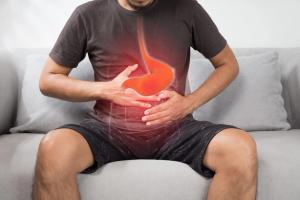
- irritable bowel syndrome (IBS)
- high blood pressure
- certain symptoms of Parkinson’s disease
- depression and anxiety
What are the beneficial psychological effects of autogenic training?
Increased self-confidence
When a child experiences that their mother accepts and loves them, they will be able to accept themselves and see themselves as valuable. The foundation of human self-love lies in the experience of being loved without conditions. This experience is essential for a sense of safety throughout our lives and for harmonious bodily functions—such as breathing, digestion, and sleep. The warmth, rhythm, and consistency found in a loving relationship lay the groundwork for basic trust and healthy self-esteem. The essence of autogenic training is to help rebuild this foundational trust—that is, to help us rediscover within ourselves the fundamental sense of security necessary for physical and mental balance.
If a young child does not receive timely and consistent care and security from their mother or caregiver, this can have long-term consequences. In later life, such deficiencies may manifest as mental and physical symptoms (psychosomatic complaints). The aim of autogenic training is to rediscover the inner foundation represented by the experience of warmth, rhythm, and consistency. Through this method, we can partially compensate for or restore balance to these early deficiencies. The exercises influence vegetative functions—our involuntary bodily processes—thereby supporting psychological processes in the deeper layers of the personality.
Effective management of anger and rage
Autogenic training primarily targets physical states: by reducing muscle tone (baseline tension), it creates resonance in the psyche. In other words, the person becomes "calmer." This helps reduce uncontrolled emotional outbursts such as anger and rage.
Self-awareness
Many people are unaware of their emotions in certain situations because they have not learned to recognize or express them, making articulation difficult. In autogenic training, practitioners gradually learn to perceive their own bodies through the awareness of physical sensations, initially through experiences of heaviness and warmth. They learn to recognize, organize, and name these sensations. Participants often report that physical sensations are accompanied by various moods and emotions. This new capacity—to become aware of and express emotions—enhances emotional self-confidence, which is a fundamental component of self-awareness.
The mechanism of autogenic training
To understand how autogenic training works, it's important to distinguish between voluntary and involuntary functions.
Striated muscles are responsible for voluntary movement. They can be consciously activated and deactivated—for example, when we reach for a glass of water or stop in front of a passing car.
Smooth muscles, however, are controlled by the autonomic nervous system and function independently of our will. They play key roles in the circulatory, respiratory, digestive, and urogenital systems, furthermore in the skin and spleen, and also include the internal muscles of the eye. During autogenic training, impulses are sent to these autonomic muscle fibers—normally functioning without conscious control—through visualization and mental focus, leading to increased blood flow.
Chronic stress results in internal restlessness and tension, which manifests as constant muscle tension. Prolonged tension eventually gives rise to various symptoms: headaches, sleep disorders, cardiovascular and respiratory complaints, and gastrointestinal issues.
Autogenic training helps release this tension, thereby relieving restlessness. As inner calm increases, anxiety and the associated physical symptoms diminish.
Advantages of autogenic training (based on clinical research)
A large body of empirical data supports the positive psychophysiological effects of autogenic training.
Stetter and Kupper conducted a meta-analysis of 60 studies 4, demonstrating that autogenic training had significantly greater benefits for practitioners compared to control groups. Clinically proven improvements were observed in the following areas:
- tension headaches 5
- irritable bowel syndrome (IBS)
- sleep disorders
- migraines
- high blood pressure
- coronary heart disease
- bronchial asthma
- somatoform pain disorder
- Raynaud’s disease
- anxiety
- mild and severe depression 6
Autogenic training in practice - an introduction to the six formulas
Autogenic training consists of six exercises that involve passive concentration on internal (proprioceptive) sensations using standard verbal formulas targeting different parts of the body. Schultz’s method does not rely on conscious will but rather on an autohypnotic process in which the individual naturally "immerse oneself in" to the exercises. Emphasis is placed on sensory states and sensations—such as heaviness and warmth in the limbs, regulation of breath and heart rate, warmth in the abdomen, and coolness in the forehead. The trainer states these sensations, and the practitioner repeats them silently. Each formula is practiced in sequence 1. The six formulas are:
1.) Heaviness formula
The first exercise involves creating a sensation of heaviness in the limbs. In a comfortable position with eyes closed, attention is directed to the arms. Mentally repeat: “My arms are getting heavier, heavier and heavier, until finally my arms are heavy.” Then repeat for the legs.
2.) Warmth formula
After mastering the heaviness formula, warmth is introduced, focusing on blood circulation and vascular dilation. Mentally repeat: “My right arm is warm, getting warmer and warmer,” continuing until a steady, pleasant warmth spreads throughout the body.
3.) Heart regulation
This formula enhances awareness and regulation of heart function with affirmations like: “My heart is beating calmly and strongly.”
4.) Breathing regulation
Here, focus is shifted to breathing with the phrase: “My breathing is calm and slow.” The goal is a natural, regular rhythm.
5.) Visceral regulation
Attention is directed to the solar plexus, the nerve center of internal organs. A common formula: “My abdomen radiates warmth.”
6.) Regulation of head temperature
Finally, attention is brought to the forehead (mind) with the phrase: “My mind is cool.”
Mastering the full series requires regular, persistent practice. However, even practicing just the first two formulas can lead to noticeable physical and mental relaxation. The method is especially effective for managing anxiety and recovering from prolonged stress.
Autogenic training and other relaxation techniques – differences and similarities
Autogenic training shares the goals of meditative practices, such as achieving greater awareness and better control over thoughts, feelings, and emotions by focusing attention inward.
Meditation
The main difference lies in intent. Autogenic training stems from a clinical background and aims at stress reduction through self-soothing techniques. Meditation may have spiritual, philosophical, or psychological goals. Both practices teach passive observation of internal processes, quietly observing the process of change and our reactions to the exercises. There are no “right” or “wrong” responses to the exercises.
Mindfulness
Autogenic training is a formal, structured technique to reduce anxiety and stress through relaxation. Mindfulness, on the other hand, is more of an attitude of open awareness and acceptance in the present moment. While autogenic training uses specific steps and formulas, mindfulness emphasizes a state of being rather than a method.
Circumstances, method, and time of practice
First, set aside uninterrupted time for practice. Autogenic training is most effective when done without time pressure. It’s easier to develop a habit if you practice at a fixed time each day. Choose a quiet environment with a comfortable temperature and soft lighting. Wear loose, comfortable clothing; loosen shoes or neckties if necessary.
Body position
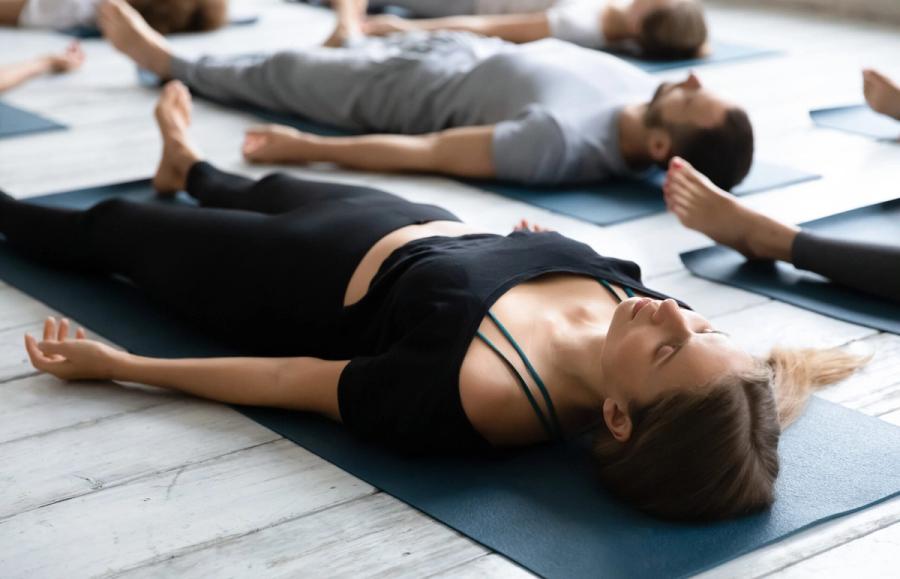
1.) Lying down: Lie on your back with legs together and feet pointing slightly outward. Arms are relaxed, slightly bent at the elbows, palms down.
2.) Sitting: Legs are side by side, knees gently turned outward for hip and thigh relaxation. Hands rest on the thighs or armrests.
3.) Sitting upright: Sit with a straight spine on a chair or bench, stable and relaxed, feet flat on the floor, hands resting on thighs.
To master the technique properly, it’s important to consult regularly with an experienced professional who is familiar with the method and can help you avoid incorrect posture or potentially harmful positions. With the guidance of a qualified trainer, each practitioner can develop a personalized set of exercises tailored to their individual characteristics, current issues, and physical or mental symptoms. These exercises can be further customized by incorporating specific formulas for more effective stress management or symptom relief.
Autogenic training is typically taught in small groups of 6–8 participants. Sessions occur weekly and last 1.5 to 2 hours. Consistent attendance is important. While not group therapy, the presence and support of others can enhance individual growth and motivation. 7
Contraindications
Autogenic training is not a replacement for cognitive-behavioral therapy and required medication or psychopharmacological treatments. It is contraindicated in cases of psychotic disorders. In general, the more severe or long-standing a problem, the more difficult autogenic training may be to learn. For milder or more recent issues, self-relaxation exercises are usually easier to learn and more effective. 8
For chronic conditions like heart disease or metabolic disorders, extra caution is required, and training should only be performed under specialist supervision.
Find out what's happening in your gut.
A comprehensive microbiome analysis reveals the composition of your gut flora — and gives you a concrete starting point for next steps.
Order the testReferences
11 referencesReferences
[1] C. Rime and F. Andrasik, ‘chapter 123 - Relaxation Techniques and Guided Imagery’, in Pain Management, S. D. Waldman and J. I. Bloch, Eds Philadelphia: W.B. Saunders, 2007, pp. 1025–1032 https://doi.org/10.1016/B978-0-7216-0334-6.50127-8
[2] K. Günter, Az autogén tréning gyakorlata - Csoportos terápia - Szervi és szervrendszeri gyakorlatok. Springer Hungarica Kiadó, 1992 https://www.scribd.com/doc/42164035/Az-autogen-trening-gyakorlata
[3] ‘What is autogenic training?’, Aug. 17, 2023 https://www.medicalnewstoday.com/articles/autogenic-training
[4] F. Stetter and S. Kupper, ‘Autogenic training: a meta-analysis of clinical outcome studies’, Appl. Psychophysiol. Biofeedback, vol. 27, no. 1, pp. 45–98, Mar. 2002, DOI: https://doi.org/10.1023/a:1014576505223
[5] E. Seo, E. Hong, J. Choi, Y. Kim, C. Brandt, and S. Im, ‘Effectiveness of autogenic training on headache: A systematic review’, Complement. Ther. Med., vol. 39, pp. 62–67, 2018, DOI: https://doi.org/10.1016/j.ctim.2018.05.005
[6] G. Krampen, ‘Long-term evaluation of the effectiveness of additional autogenic training in the psychotherapy of depressive disorders’, Eur. Psychol., vol. 4, no. 1, pp. 11–18, 1999, DOI: https://doi.org/10.1027/1016-9040.4.1.11
[7] ‘Autogenic training’, University College London Hospitals NHS Foundation Trust https://www.uclh.nhs.uk/our-services/find-service/integrated-medicine/autogenic-training
[8] S. Mirgain and J. Singles, ‘Autogenic Training’, Autogenic Train. https://www.uclh.nhs.uk/our-services/find-service/integrated-medicine/autogenic-training