
Functional medicine

Functional medicine meets the healthcare needs of the 21st century by shifting from a traditional disease-centered medical practice to a more patient-centered approach. Functional medicine looks at the whole person, not just isolated symptoms. It takes into account the entire medical history and considers how genetic predispositions, environmental influences, and lifestyle factors interact, particularly in complex, chronic conditions. Although the terms functional medicine and functional nutrition are often used interchangeably, they are not the same. Functional medicine is a broad approach that views health problems as system-wide failures within the body. Functional nutrition takes this perspective further, emphasizing that diet is the foundation of health, and an inadequate diet can lead to numerous issues. 1 Functional medicine is still a relatively new field in Europe and is currently in its early stages of development. In contrast, the United States has decades of experience with this approach. In the US, functional medicine is well-established as an effective approach to preventing and treating chronic diseases. In clinics, doctors often work with functional lifestyle coaches to provide personalized support to help patients transition to and maintain a healthier lifestyle. 2
What is functional medicine?
The functional medicine model is a personalized, patient-centered, science-based approach that enables patients and practitioners to collaborate in finding the root causes of disease and achieving optimal health. It requires an in-depth understanding of an individual's genetic, biochemical, and lifestyle factors to create personalized treatment plans that lead to improved symptoms. 3 Characteristics of functional medicine:
- It is patient-centered, rather than disease-centered, aiming to promote overall health beyond the absence of disease. 4
- Practitioners examine clinical imbalances within biological systems and identify the underlying causes of diseases and dysfunctions. 5–6
- Instead of temporary symptomatic treatments, the goal is to uncover root causes and achieve genuine healing. 7
- Dietary and lifestyle modifications are fundamental to preventing and managing chronic diseases. 4
- Physicians and patients work closely together through a therapeutic partnership to achieve health goals. 7
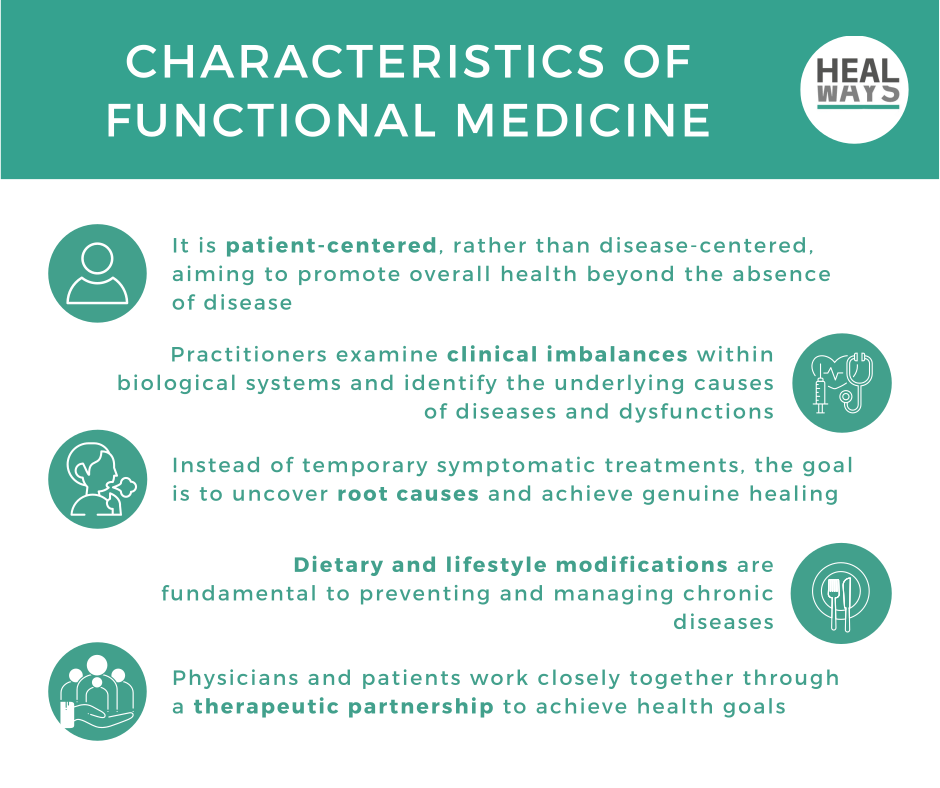
Figure 1: Main characteristics of functional medicine
The relationship between functional medicine and integrative medicine
Integrative medicine is a medical practice emphasizing the importance of the practitioner-patient relationship, addressing the whole person, and using evidence-based methods along with all suitable therapeutic approaches, healthcare professionals, and disciplines to promote optimal health and healing. Integrative medicine respects individual needs and multiple modes of healing. This approach represents significant progress compared to recent medical practices, returning medicine to its original patient-focused intent. As described above, integrative physicians might use a functional approach, while functional physicians may incorporate complementary therapies and other professionals into their care. Both approaches are holistic. 8
Functional medicine matrix
Practitioners of functional medicine use various methods to organize and interpret information and guide treatment decisions, enabling personalized and flexible care. They favor systems and models that focus on the patient’s unique clinical condition rather than standardized protocols. Central to this is the functional medicine matrix, which prompts physicians to adopt an investigative approach, considering all potential causes of a patient's dysfunction. This helps them provide nutritional advice targeting root causes. The matrix is primarily designed for physicians but is also beneficial for dietitians and nutritionists.
Section 1: the 7 fundamental imbalances
At the core of the functional medicine matrix is a section helping practitioners categorize clinical problems according to the seven fundamental physiological imbalances identified by the IFM. These imbalances—including nutrient deficiencies, inflammation, hormonal disruptions, or detoxification issues—often underlie chronic diseases and become treatment targets. 9 They include:
- Assimilation: includes digestion, absorption, respiration, and gut microbiome
- Protection & repair: refers to immunity, inflammation, and infection
- Energy: related to energy regulation and mitochondrial function
- Biotransformation & elimination: deals with toxicity and detoxification
- Transport: examines imbalances related to the cardiovascular and lymphatic systems
- Communication: related to neurotransmitters, endocrine, and immune messengers
- Structural integrity: ranges from subcellular membranes to musculoskeletal structures
Stage 2: patient’s history
The left side of the matrix (“patient’s history”) reviews disease development based on "precedents, triggers, and mediators." 10
- Precedents: factors predisposing a person to disease, including genetic or environmental influences (such as nutrition or physical fitness).
- Triggers: factors that cause symptoms to emerge, such as infections, trauma, environmental toxins, or food allergies/sensitivities.
- Mediators: factors contributing to pathological changes and dysfunctional responses, such as biochemical elements (cytokines, hormones) or psychosocial factors (patient’s thoughts, beliefs).
Stage 3: lifestyle factors
The matrix’s bottom row categorizes lifestyle factors into five main areas: sleep and rest, exercise and physical activity, nutrition, stress management, and social relationships. Functional nutrition professionals are trained to address these lifestyle areas broadly, but their specific expertise lies in nutrition. 11
The 5-R Protocol
Many functional dietitians and nutritionists use a modified version of the Institute for Functional Medicine (IFM) "5-R Protocol" to treat gastrointestinal issues associated with chronic diseases. The 5-R protocol includes:
- Remove: Eliminate all foods from the diet that the patient is allergic to, sensitive to, or intolerant of. This step also includes removing pathogens present in the digestive system.
- Replace: replenishing substances lacking in the body (such as vitamins, minerals, enzymes, fatty acids).
- Reinoculate: restoring intestinal bacterial balance with probiotics and fermented foods, if necessary.
- Repair: Healing damage to the intestines as needed with dietary supplements that support this process.
- Rebalance: Evaluate your current lifestyle to identify areas of imbalance. This includes reviewing factors such as sleep quality, stress levels, work-life balance, social support, and stress-reducing activities. 11
The 5-R protocol provides a structured framework for managing complex health issues requiring nutritional intervention. Steps can be sequential, ordered, or simultaneous as part of a multi-pronged strategy.
What is the difference between functional and traditional medicine?
Functional medicine uses a health-centered approach, focusing on achieving and maintaining optimal health rather than just treating disease. In contrast, conventional medicine—effective in managing acute conditions, emergencies, and many chronic diseases—emphasizes existing symptoms and medical conditions. Conventional care often prioritizes rapid symptom relief through medication or surgery, while functional medicine emphasizes prevention, lifestyle optimization, and addressing root causes. The following list summarizes the main differences between functional and conventional medicine 12: Functional medicine
- Health-centered approach
- Collaborative, patient-centered model
- Consideration of individual biochemical characteristics
- Cost-effective in the long term
- Elimination of symptoms through identification of the root cause
- Preventive approach
- Technologically advanced and personalized care
Conventional medicine
- Disease-centered approach
- Hierarchical, physician-directed model
- Standardized treatment protocols
- Effective in the short term, but costly
- Managing symptoms using effective methods/tools
- Early detection of disease
- Use of advanced technology
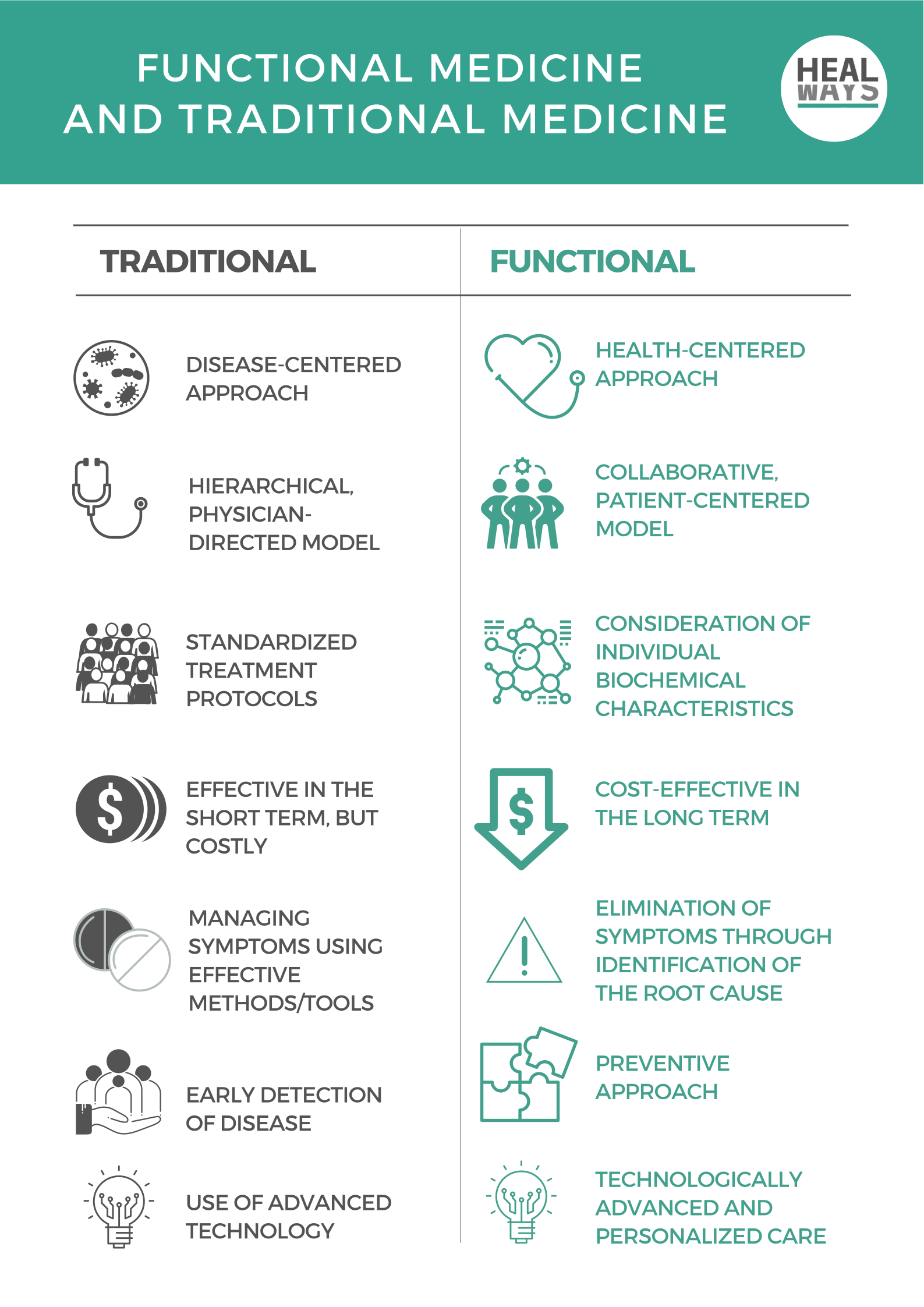
Figure 2: Main differences between conventional medicine and functional medicine
Let us consider a patient diagnosed with diarrhea-predominant irritable bowel syndrome (IBS-D) as an example. The traditional, non-functional approach would focus primarily on symptom management: the patient would be advised to follow a low-FODMAP diet and to identify and avoid irritating foods. Additionally, nutritional guidance would be provided to prevent dehydration, a common issue in conditions associated with diarrhea. In contrast, the goal of functional medicine is not only to alleviate symptoms but to uncover the root cause of the problem. This approach includes targeted laboratory testing to rule out possible causes, such as small intestinal bacterial overgrowth (SIBO), gut microbiota imbalance (dysbiosis), parasitic infections, food sensitivities, allergies, or intolerances. Furthermore, the individual's lifestyle, stress levels, and overall health are thoroughly assessed. Thus, the treatment plan is not solely symptom-based but tailored to address and eliminate the underlying causes. 11 Of course, prescription drugs have their appropriate place and time, but relying almost exclusively on medication in our healthcare system presents several fundamental issues:
- Medicines rarely address the root causes of health problems.
- In addition to masking symptoms, medications suppress bodily functions, including vital processes. Over time, this can actually worsen the underlying problem.
- Medications often correct one imbalance by creating one or more additional imbalances and frequently have side effects. In many cases, a medication’s unintended effects outweigh its desired benefits. 12
- Medications also represent a significant financial expense. In the European Union, the average pharmaceutical expenditure was around 1.4% of GDP, and medication costs accounted for approximately 17% of total healthcare spending. However, in the late 2010s, at least one member state exceeded both of these averages, with medication spending reaching nearly 2% of GDP and accounting for over 30% of total healthcare expenditures. 13–14
Conventional medicine often treats diseases with drugs aimed primarily at alleviating symptoms, but these drugs frequently cause side effects—thus, true healing often does not occur. In contrast, functional medicine actively promotes health. Functional medicine practitioners strive either to prevent disease or, if a condition already exists, identify its root cause and restore the body to full health rather than simply treating symptoms. 12 One of the strengths of functional medicine is that it shortens the gap between scientific discoveries and their clinical application. Whereas in conventional medicine it often takes 15–17 years for new research findings to be integrated into practice, functional medicine practitioners apply these breakthroughs in real time. Consequently, innovative methods and therapies become available more quickly within functional medicine, and patients are among the first to benefit from these advances. This approach combines scientific rigor with a practical, patient-centered method, leading to remarkable results in many cases. Numerous patients have reported improvements in chronic or complex conditions that could not be effectively treated by conventional medical methods. 3
The relationship between therapist and client
One of the fundamental characteristics of functional medicine is the partnership between therapist and patient. Lasting recovery can only occur if the patient assumes responsibility for their own health and is willing to change lifestyle habits that are harmful in the long term. In this approach, the therapist does not merely give instructions but rather serves as a partner in the process, working collaboratively with the patient to set goals and determine how to achieve them. Functional medicine is not a specific "cure" or ready-made solution but rather an approach and set of tools that can help reverse chronic conditions—provided the patient is prepared to make changes. The practitioner listens to the patient's concerns, acknowledges their difficulties, and helps identify solutions to obstacles that might hinder health improvement. 2 Functional medicine recognizes that lifestyle and behavior play a critical role in the development of chronic diseases and thus encourages patients to actively and consciously participate in their own healing process. In contrast, traditional medicine often still relies on one-way communication, in which the doctor is viewed as the "expert" who provides the answers, and the patient is a passive recipient. 12
Find out what's happening in your gut.
A comprehensive microbiome analysis reveals the composition of your gut flora — and gives you a concrete starting point for next steps.
Order the testReferences
17 referencesReferences
[1] Maddy, ‘What is Functional Nutrition?’, AFPA, July 28, 2024 https://www.afpafitness.com/blog/what-is-functional-nutrition/
[2] C. van der Eerden, ‘Funktionelle Medizin – ein zukunftsweisendes Konzept’, Akademie für menschliche Medizin – AMM, June 02, 2020 https://spitzen-praevention.com/2020/06/02/funktionelle-medizin-ein-zukunftsweisendes-konzept/
[3] ‘| The Institute for Functional Medicine’ https://www.ifm.org/functional-medicine
[4] R. DeBusk, V. S. Sierpina, and M. J. Kreitzer, ‘Applying functional nutrition for chronic disease prevention and management: bridging nutrition and functional medicine in 21st century healthcare’, Explore (NY), vol. 7, no. 1, pp. 55–57, 2011, DOI:https://doi.org/10.1016/j.explore.2010.10.007
[5] J. Bland, ‘Functional Medicine: An Operating System for Integrative Medicine’, Integr Med (Encinitas), vol. 14, no. 5, pp. 18–20, Oct. 2015 https://www.ncbi.nlm.nih.gov/pmc/articles/PMC4712869/
[6] J. Bland, ‘Defining Function in the Functional Medicine Model’, Integr Med (Encinitas), vol. 16, no. 1, pp. 22–25, Feb. 2017 https://www.ncbi.nlm.nih.gov/pmc/articles/PMC5312741/
[7] P. Hanaway, ‘Form Follows Function: A Functional Medicine Overview’, Perm J, vol. 20, no. 4, pp. 16–109, 2016, DOI:https://doi.org/10.7812/TPP/16-109
[8] ‘Functional Medicine – Functional Nutrition Alliance’ https://www.fxnutrition.com/blog/post/functional-medicine
[9] G. Plotnikoff and M. Barber, ‘Refractory Depression, Fatigue, Irritable Bowel Syndrome, and Chronic Pain: A Functional Medicine Case Report’, Perm J, vol. 20, no. 4, pp. 15–242, 2016, DOI:https://doi.org/10.7812/TPP/15-242
[10] L. Galland, ‘Patient-centered care: antecedents, triggers, and mediators’, Altern Ther Health Med, vol. 12, no. 4, pp. 62–70, 2006 https://pubmed.ncbi.nlm.nih.gov/16862744/
[11] A. R. LDN MS, RDN, ‘What Is Functional Nutrition?’, Functional Nutrition Answers, Jan. 11, 2019 https://www.functionalnutritionanswers.com/what-is-functional-nutrition/
[12] C. K. M.S, ‘What Is Functional Medicine and How It Can Help You?’, Chris Kresser, Jan. 18, 2019 https://chriskresser.com/what-is-functional-medicine-and-how-it-can-help-you/
[13] ‘Versenykepessegi_Jelentes_HUN.pdf’ https://www.mnb.hu/letoltes/versenykepessegi-jelentes-hun-2020-0724.pdf
[14] ‘2021_Country_Health_Profile_Hungary_ENG.pdf’ https://health.ec.europa.eu/system/files/2021-12/2021_chp_hu_english.pdf